Understanding and Conquering Bad Breath
Bad breath (halitosis) is a common problem that can affect anyone. While occasional bad breath is normal, persistent halitosis can impact your social life and confidence. Let’s explore the causes and solutions.
What Causes Bad Breath?
Oral Causes (Most Common)
1. Poor Oral Hygiene
- Bacteria on teeth, gums, and tongue produce odorous compounds
- Food particles left between teeth decay and smell
2. Gum Disease
- Infection produces foul-smelling bacteria
- Deep pockets trap debris
3. Dry Mouth (Xerostomia)
- Saliva naturally cleanses the mouth
- Medications, breathing through mouth, and aging reduce saliva
4. Tongue Coating
- Bacteria accumulate on the tongue’s surface
- Often visible as white or yellow coating
5. Dental Problems
- Cavities harbor bacteria
- Old, failing restorations can trap food
- Infected teeth produce pus
Non-Oral Causes
Sinus and Throat Infections
- Post-nasal drip feeds bacteria
- Tonsil stones produce sulfur compounds
Digestive Issues
- Acid reflux brings stomach odors to mouth
- Certain digestive conditions affect breath
Systemic Diseases
- Diabetes (fruity odor)
- Kidney disease (ammonia-like)
- Liver disease (musty smell)
Diet and Lifestyle
- Garlic, onions, and spices
- Coffee and alcohol
- Smoking and tobacco
- Low-carb diets (ketosis)
How to Test Your Breath
- Lick test: Lick your wrist, wait 10 seconds, smell
- Spoon test: Scrape tongue with spoon, smell residue
- Trusted friend: Ask someone you trust for honest feedback
- Professional analysis: Ask your dentist
Effective Solutions
Improve Oral Hygiene
Brushing:
- Brush twice daily for 2 minutes
- Use fluoride toothpaste
- Don’t forget the gum line
- Replace brush every 3 months
Flossing:
- Floss daily
- Removes food between teeth
- Prevents gum disease
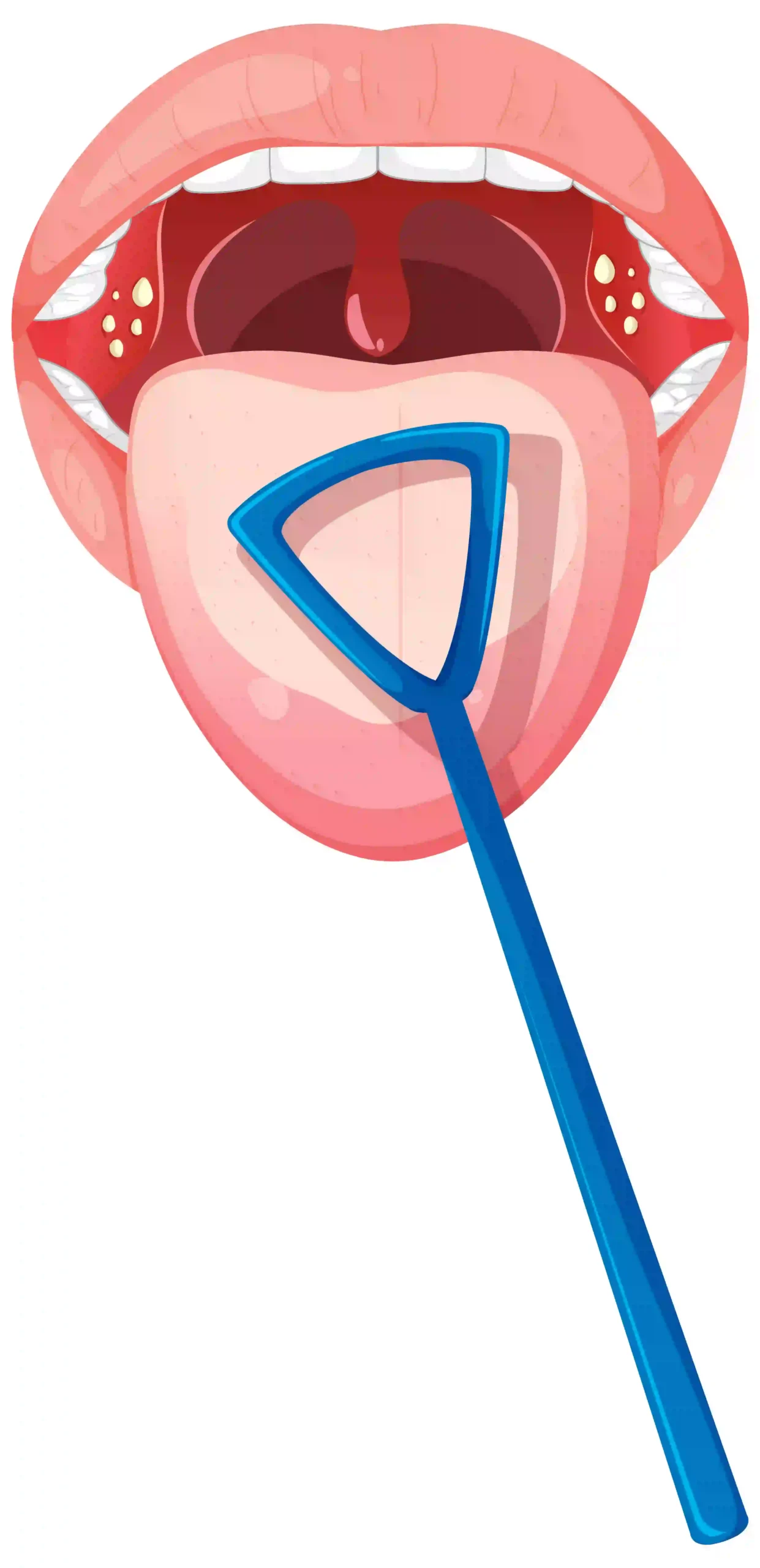
Tongue Cleaning:
- Use a tongue scraper or brush
- Clean from back to front
- Do this daily
Mouthwash:
- Antibacterial varieties reduce bacteria
- Not a substitute for brushing/flossing
- Avoid alcohol-based if dry mouth is an issue
Stay Hydrated
- Drink plenty of water throughout the day
- Chew sugar-free gum to stimulate saliva
- Avoid excessive caffeine and alcohol
Diet Adjustments
- Limit odorous foods when breath is important
- Eat crunchy fruits and vegetables (natural cleaning)
- Avoid excessive sugar (feeds bacteria)
Address Underlying Issues
- Treat gum disease promptly
- Fill cavities
- Replace failing restorations
- Manage dry mouth
- See a doctor for systemic issues
Professional Treatment
When home remedies aren’t enough, we can help:
- Thorough cleaning to remove tartar and bacteria
- Gum disease treatment if present
- Cavity treatment to remove decay
- Consultation to identify underlying causes
- Specialized treatments for chronic halitosis
Products That Help
Recommended:
- Antibacterial mouthwashes
- Tongue scrapers
- Alcohol-free mouth rinses (for dry mouth)
- Sugar-free mints and gum
Use with Caution:
- Alcohol-based mouthwashes (can worsen dry mouth)
- Regular mints (sugar feeds bacteria)
When to See a Dentist
Seek professional help if:
- Bad breath persists despite good oral hygiene
- You have persistent dry mouth
- You notice other symptoms (bleeding gums, pain)
- Bad breath is affecting your quality of life
Get Professional Help
Persistent bad breath can be solved. Contact our family dental clinic in Nairobi for a comprehensive evaluation and personalized treatment plan.